


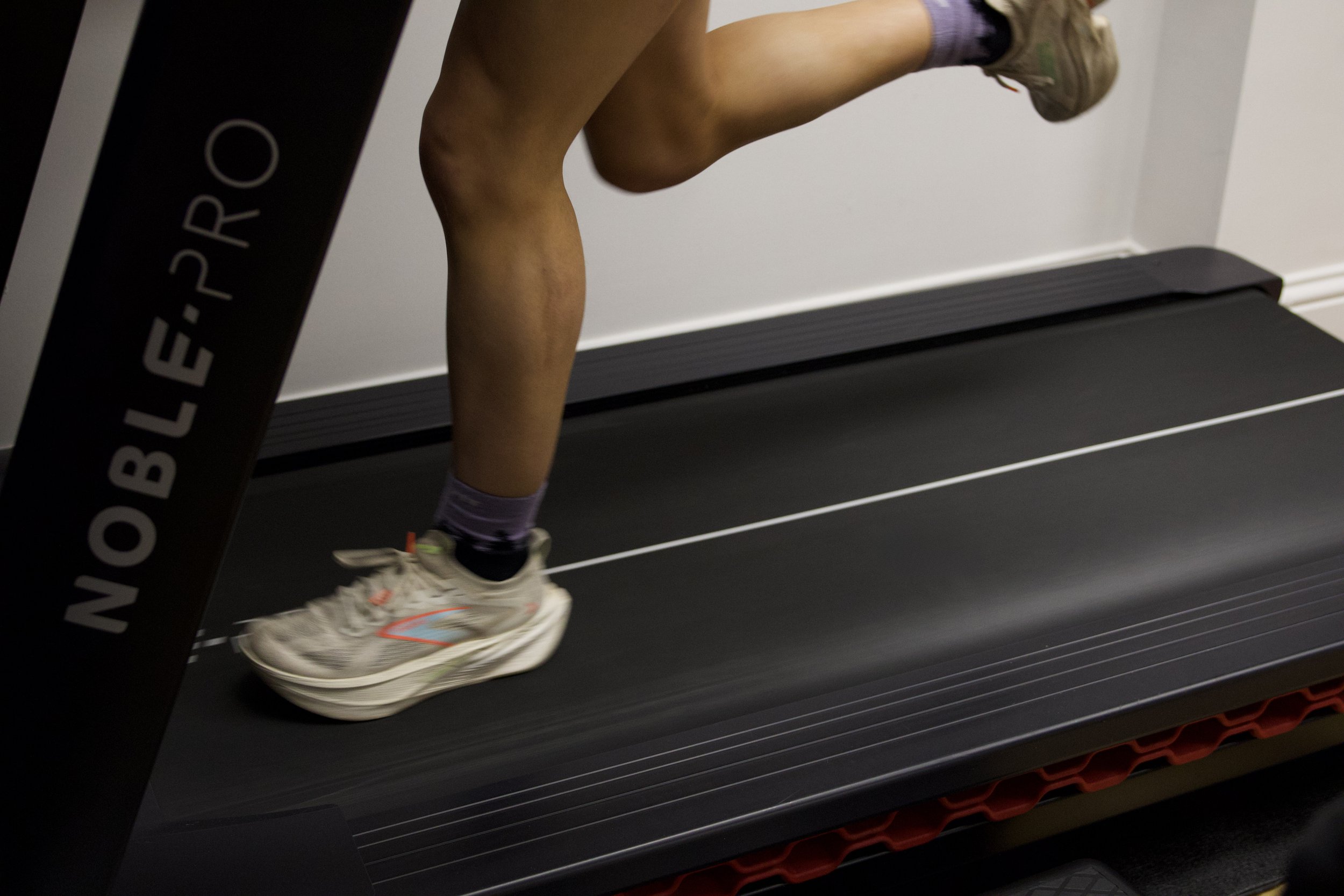
Sports Performance profiling - Cheshire
Our most complete testing package. Understand your physiology, metabolism, strength, power and performance limiters in one full profile
What our full sports performance profiling?
Our Full Sports Performance Profile is a complete deep dive into the systems that drive your performance. It combines advanced metabolic testing, VO₂ max and blood lactate analysis, resting metabolic rate testing, force plate analysis and dynamometry to build a detailed picture of your physiology, fuelling needs, strength, power, symmetry, stability and sport-specific physical qualities. Every profile is tailored to your sport, training history, injury background and goals, so the data is relevant to what you actually need to perform.
The real value is not just collecting more data, it is understanding how each part of your profile affects the others. Your VO₂ max shows the size of your engine, your lactate thresholds show how much of that engine you can use, RMR helps us understand your energy demands, and force plate and strength testing show how well you produce, absorb and reuse force. By bringing all of this together, we can identify what may be limiting performance, reducing efficiency or increasing unnecessary stress on the body, then give you a clear overview of where you are now and what to prioritise next.
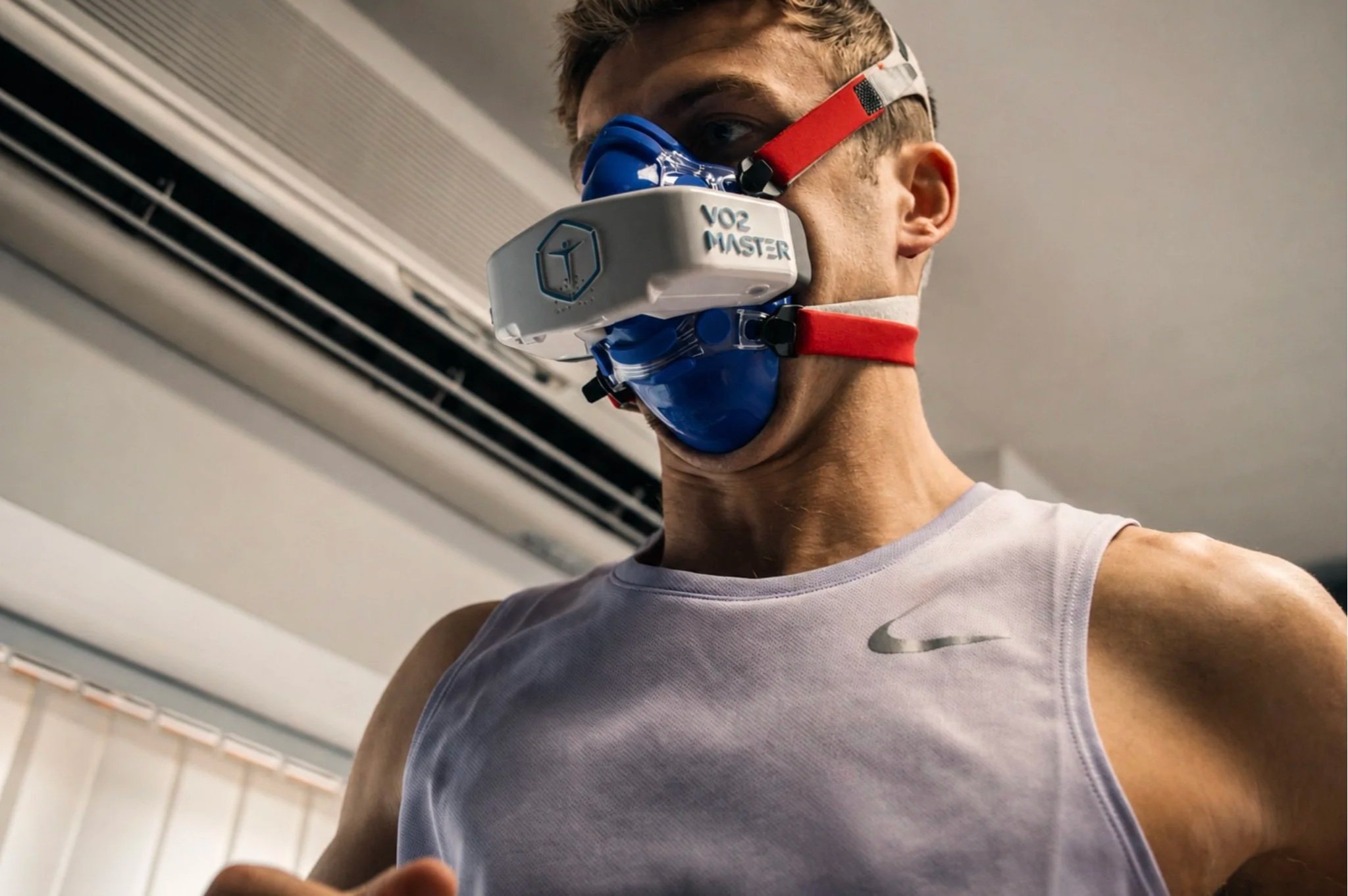
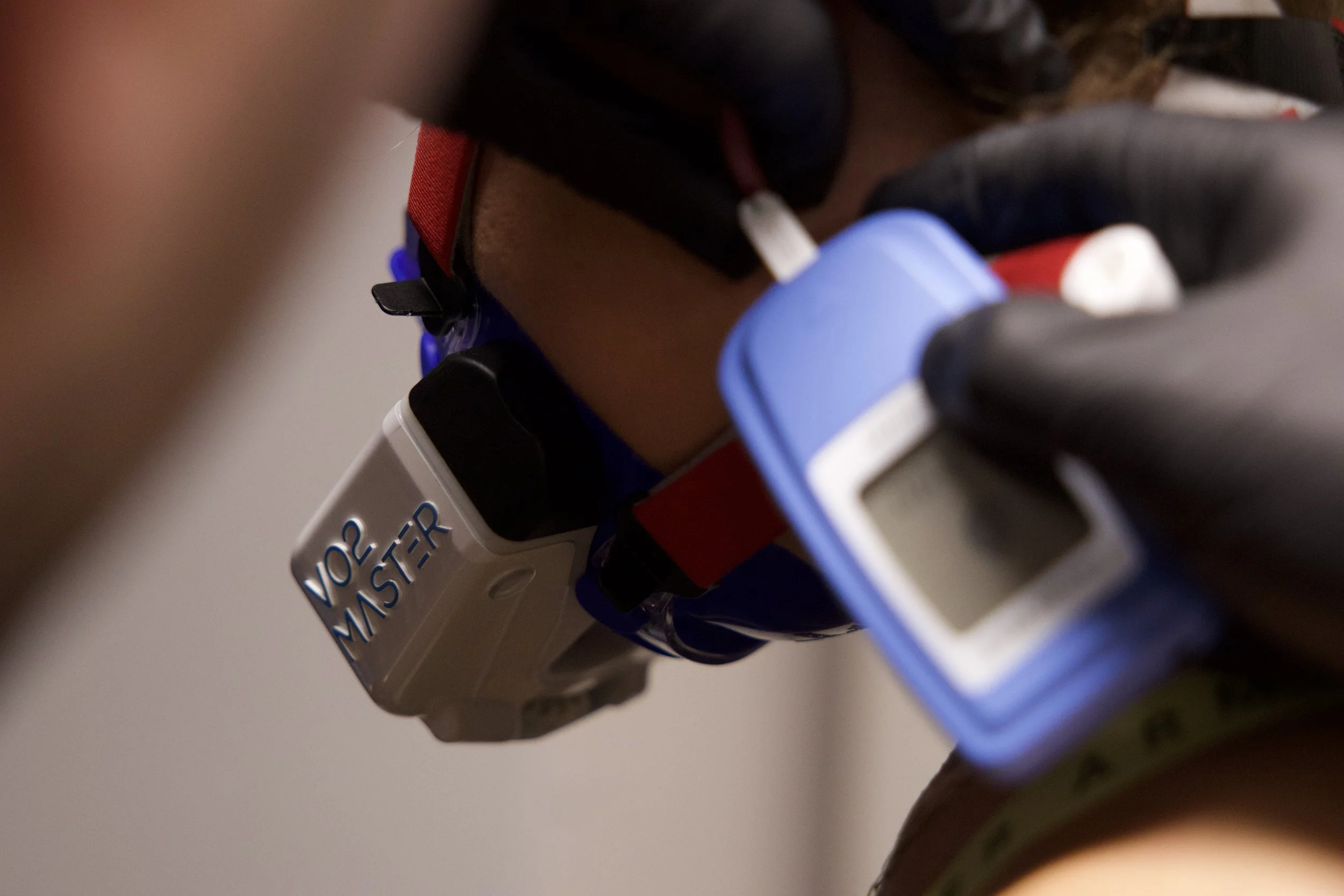
How our full performance profiling works
Your Full Performance Profile starts with a detailed conversation about your sport, training history, injury background and goals. This helps us build a testing battery that is specific to you, rather than putting every athlete through the same generic process. A runner, HYROX athlete, cyclist, footballer or field sport athlete may all need slightly different strength, power and force plate tests depending on the demands of their sport.
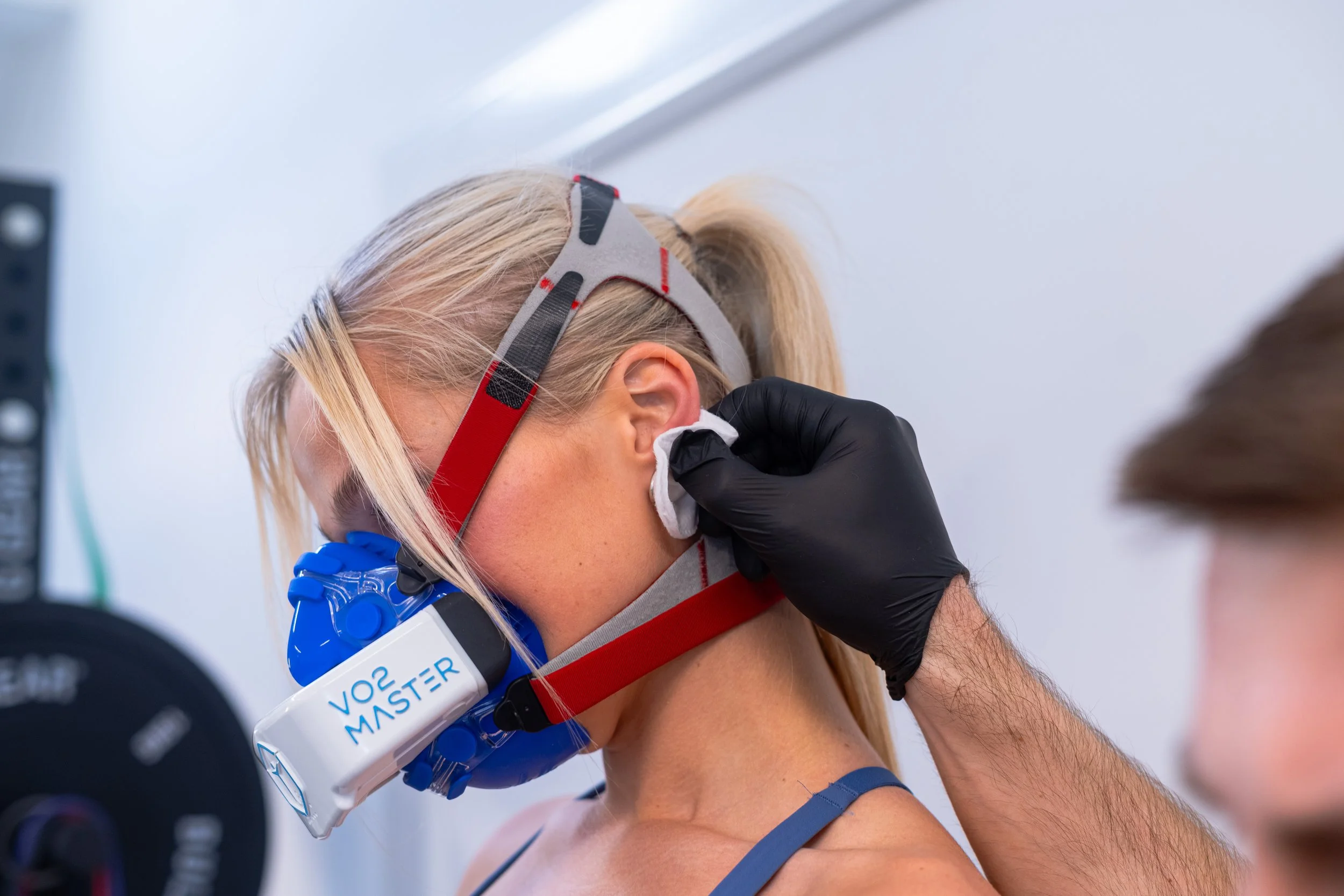
From there, we complete your full testing session. This includes combined VO₂ max and blood lactate testing, resting metabolic rate testing, force plate analysis and dynamometry using VALD technology. The full testing battery is then analysed from both a performance and injury risk perspective, working closely with The Injury & Performance Clinic to give you elite-level insight into how your body performs, where your physical strengths and weaknesses sit, and what may need addressing next. The full appointment usually takes around 2.5 to 3 hours, or can be performed over two sessions. This will leave you with objective data, clear interpretation and a better understanding of what to prioritise.
What data do you get from your performance profiling?
-
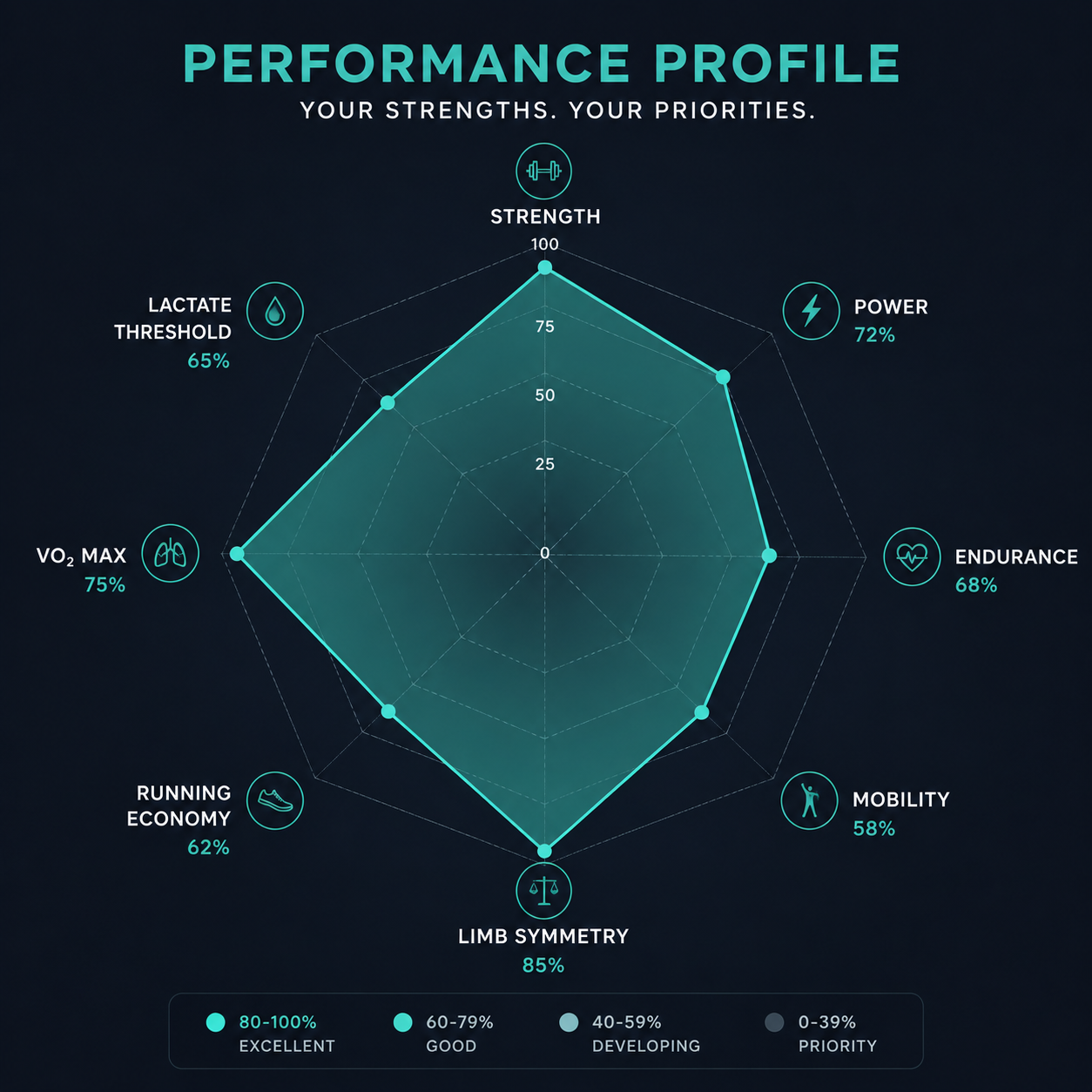
Your Performance Profile gives you a complete overview of how your body performs across physiology, metabolism, strength, power, symmetry, stability and sport-specific physical qualities.
Rather than looking at one isolated number, we bring all of the data together to understand your full performance profile.
-
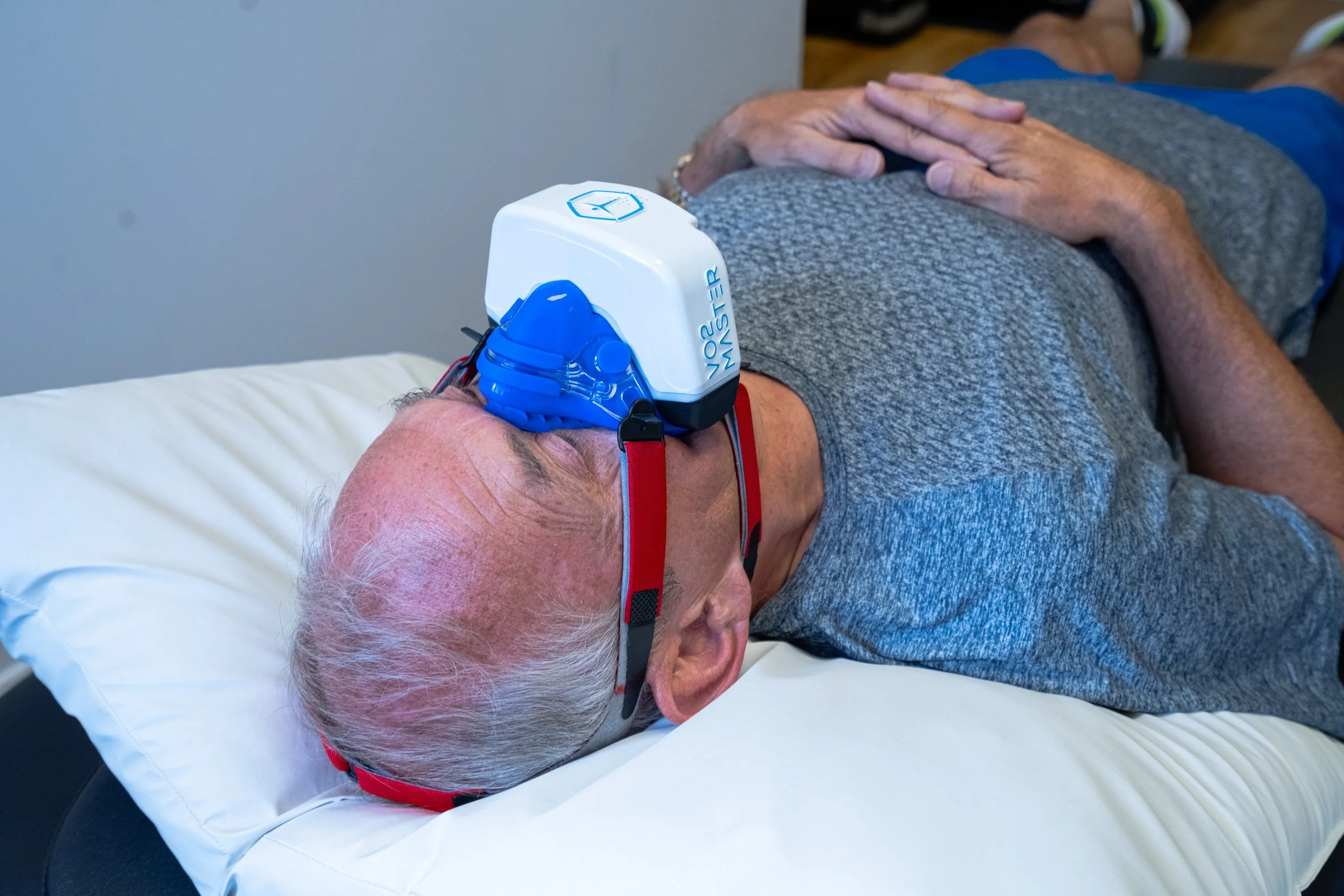
You gain a clear understanding of your VO₂ max — the size of your aerobic engine.
This helps show your current cardiovascular fitness and whether improving your aerobic ceiling should be a priority.
-
Your VO₂ max assessment also provides valuable information about your breathing response to exercise, including ventilation (VE), breathing frequency, tidal volume and ventilatory patterns as exercise intensity increases.
These measurements help us understand how your respiratory system responds to increasing workloads and can provide useful insights into breathing efficiency and exercise tolerance.
-
Your lactate thresholds show where your sustainable training intensities sit.
This helps us understand how much of your aerobic capacity you can actually use, and allows us to build more accurate training zones around your real physiology.
-
For runners, the profile can help us understand some of the physical qualities that may influence running economy.
Running economy is affected by several factors, including physiology, technique, strength, stiffness, reactive ability and how efficiently you produce and absorb force.
By combining metabolic testing with force plate and strength data, we can explore whether performance may be limited more by your aerobic profile, your thresholds, your technique, or physical qualities such as power output, reactive strength, calf capacity, stability or asymmetry.
For example, two runners may have similar VO₂ max and lactate thresholds, but one may run faster at the same effort because they produce and reuse force more effectively. Force plate analysis can help show whether strength, power or reactive qualities may be part of the reason.
-
Five physiologically-anchored training zones built entirely from your own thresholds, not age-predicted formulas, not resting heart rate estimates. Zones that reflect your actual physiology and make every session count.
-
Your RMR test shows how many calories your body burns at rest.
This gives useful insight into fuelling, recovery, body composition and whether your energy intake is supporting the demands of your training.
-
The profile is also analysed from an injury perspective.
This does not predict injury, but it can highlight physical weak points such as strength deficits, asymmetry, poor load tolerance, reduced reactive strength or stability issues that may be worth addressing.
-
Force plate testing shows how you produce, absorb and control force.
Depending on your sport, this may include jump performance, maximal force, reactive strength, landing strategy, stability and asymmetry.
For runners, this can help us understand physical qualities that may influence running economy, repeated loading and performance. For field sport athletes, it can help highlight qualities linked to power, braking, landing control and side-to-side differences.
Why you should get a complete performance profiling
Most athletes know they want to improve. Fewer know exactly what is holding them back.
Individual tests are can help you make huge strides in your performance a full performance profile is a game changer. A VO₂ max test can show the size of your aerobic engine, a lactate test can show your thresholds. An RMR test can show your baseline energy needs. Force plate and dynamometry testing can show your strength, power, symmetry and load tolerance. But performance is rarely limited by one thing, that’s why the Complete Performance Profile brings all of these tests together, allowing us to see how your physiology, fuelling, strength, power and injury risk factors interact.
This means we are not just looking at isolated numbers, we are building a full picture of your performance.
Training without it:
You may be guessing whether you need more fitness, more intervals, better fuelling, more strength, more power, improved technique or better recovery.
Training with it:
You get a complete overview of your aerobic capacity, thresholds, metabolism, strength, power, symmetry, stability and sport-specific physical qualities — all interpreted together to show what is most likely to move the needle.oad tolerance or a more targeted training plan.
Spread the cost
Get our most complete performance profiling and spread the cost with Clearpay, or split the cost with Klarna at checkout, subject to approval.
Unlock your potential now. Spread the cost. Train with more precision.


Our other services
-
![]()
Lactate testing
Blood lactate testing gives you a clear view of how your body responds as intensity increases. By identifying your key thresholds and training zones, we can show you exactly where to build endurance, improve efficiency, and train harder without guessing.
-
![]()
VO2 + Lactate
Our most complete metabolic test. Combining VO₂ max and blood lactate data gives you a gold-standard view of your aerobic capacity, thresholds, training zones and performance limiters
-
![]()
VO2 Max Testing
Measure your aerobic capacity and understand the size of your engine. VO₂ max testing gives you objective data on your fitness, ventilatory thresholds and training zones, helping you train smarter, track progress and improve performance with precision.
-
![]()
RMR testing
Understand your metabolism and remove the guesswork from nutrition. RMR testing measures how many calories your body burns at rest, giving you a clear foundation for fat loss, fuelling, performance and long-term progress.
Contact us
Frequently Asked Questions
-
The full session takes approximately 60–75 minutes, including a pre-test consultation, the active ramp protocol (typically 8–20 minutes), and a results debrief where we walk you through every metric and what it means for your training.
-
Not at all. We test everyone from club runners to competitive professionals. The data is equally valuable at every level — and athletes earlier in their development often see the biggest gains from applying threshold-based training for the first time.
-
Arrive rested and avoid strenuous exercise for 24-48 hours beforehand. Avoid a heavy meal in the 2-3 hours prior, and arrive well hydrated. We’ll send you a full pre-test protocol when you book.
-
We can test on either. Most runners choose the treadmill; cyclists typically prefer the bike. If you’re unsure, we’ll advise you at the point of booking.
-
A big one. In a controlled trial, people who trained to individually tested thresholds gained more than double the fitness of those using generic formula-based zones — and every single one of them improved, versus fewer than half on the standard method. Accurate zones mean every session targets the right intensity, so less effort is wasted.
-
A VO2 max test uses breath-by-breath gas exchange analysis to measure oxygen and CO2, giving you ventilatory thresholds, fat oxidation data, running economy, and your true aerobic ceiling. A lactate test uses blood samples taken during a submaximal protocol to directly measure lactate accumulation at each exercise intensity. Both identify your thresholds, but through complementary methods - and together they give a richer, more complete picture than either alone. For most serious endurance athletes, we’d recommend our combined VO2 max and lactate test, or our Full Performance Profile if you want the most comprehensive physiological dataset we offer.
-
Wrist-based estimates rely on heart-rate algorithms and assumptions, not actual measurement of the air you breathe. Studies show consumer watches can be off by 10–15%, and they tend to get less accurate the fitter you are — one study found Garmin underestimated trained runners by over 6 ml/kg/min. They're great for tracking trends day to day, but for setting training zones and making real decisions, you want your actual numbers, not an estimate. A lab test measures your true oxygen uptake breath-by-breath and pinpoints your real thresholds.
-
How often you get a VO2 max test depends entirely on the level of insight you are looking for. As your physiology changes re testing allows you to track what is working and adjust your training to suit your new markers. Some people do a one off test but most re test every 3,6 or 12 months.