


Blood lactate testing - Cheshire
Find your thresholds. Train with purpose. Eliminate the guesswork
What is Blood lactate testing?
Blood lactate testing is a way of measuring how your body responds to exercise as the intensity gradually increases. Lactate is a normal substance produced during energy metabolism during exercise and is a key marker of how your body is coping with intensity. Testing your lactate allows us to not only identify key training thresholds but also understand how efficiently your body is coping with different exercise intensities.
The result is a much clearer picture of your endurance profile than watches, or generic training zones alone. With your lactate results, we can identify the actual paces, heart rates, or power outputs you should be training at to improve fitness, endurance, performance, and race preparation with far more precision.
How our Blood lactate testing works
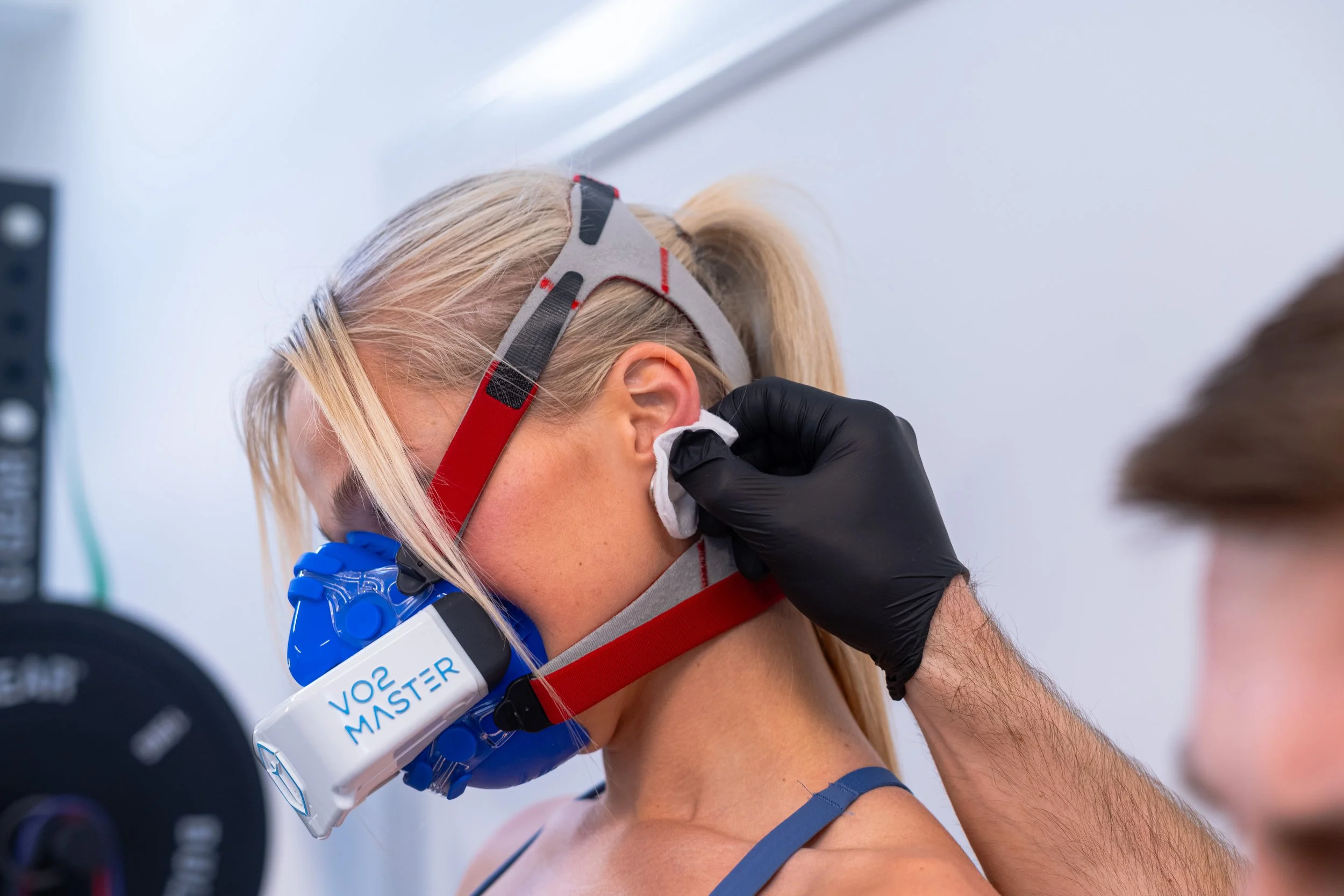
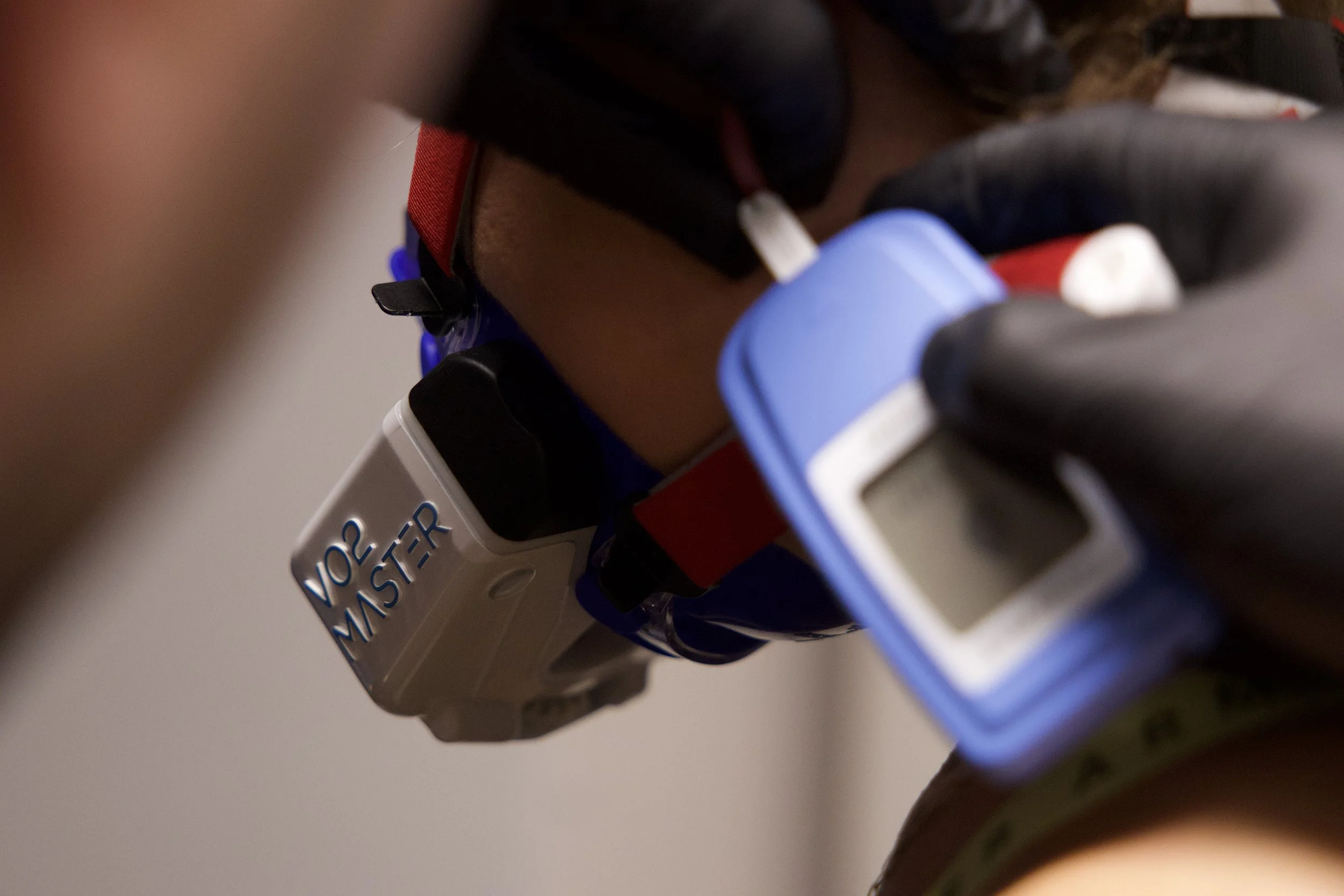
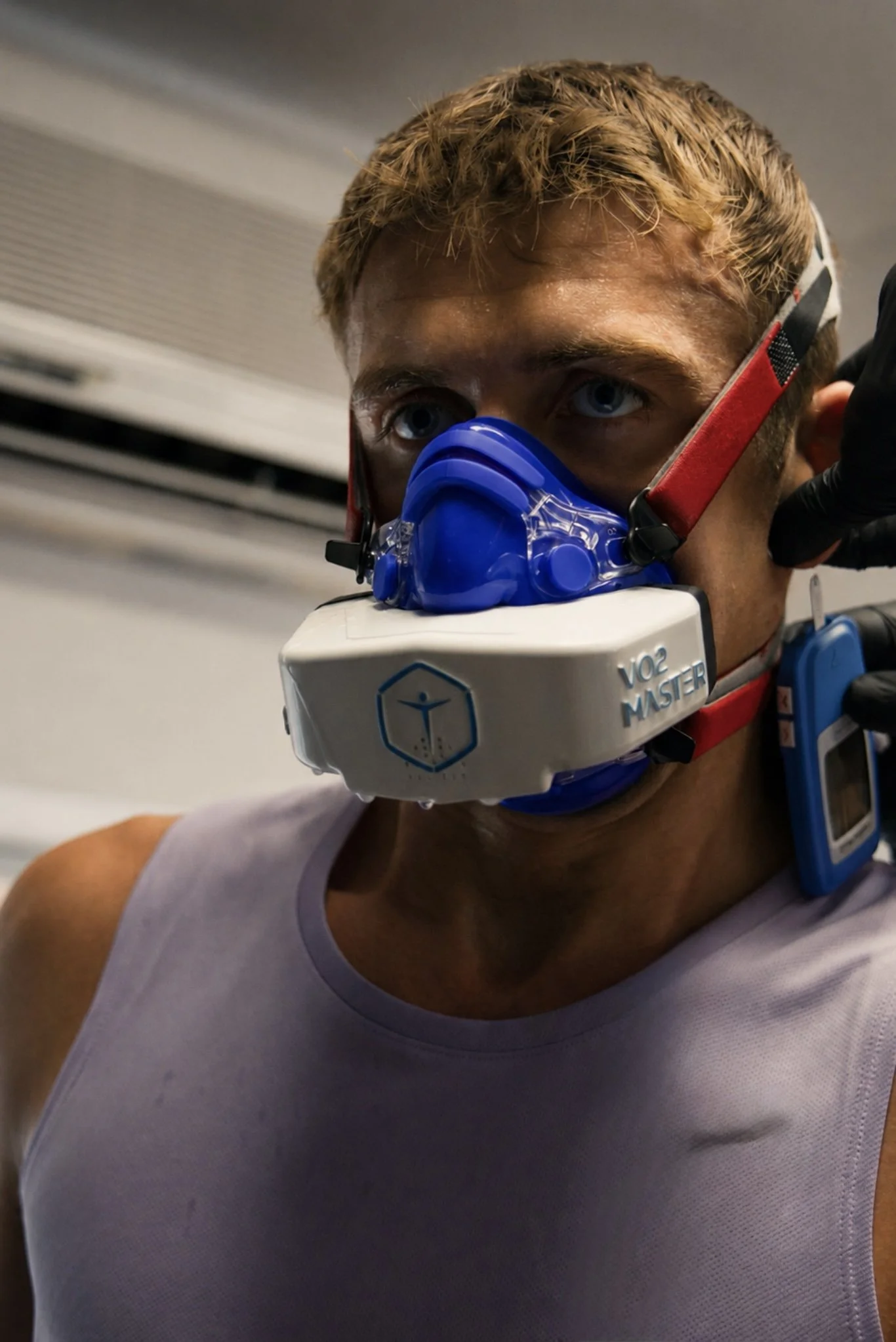
For our lactate test you will complete a structured step test on a treadmill or bike which will be modified to suit you. We When performing on the treadmill we start at a pace a couple of stages below your suspected LT1 and increase by 0.5 kph every 3-4 minutes until we see a clear LT2. At the end of each stage, we take a small blood capillary blood sample, usually from the ear or finger, and measure your blood lactate level. Throughout the test we are also monitoring heart rate, RPE and treadmill speed, this allows us to see how your lactate response changes as intensity increases and relate that to other markers such as pace or HR.
The active test usually takes around 30–45 minutes, with the full appointment including preparation, testing and results explanation taking approximately 75 minutes. Click here to see our full detailed Lactate testing protocol.
Small blood samples. Clear thresholds. Objective zones built around your physiology.
What data do you get from your lactate test?
-
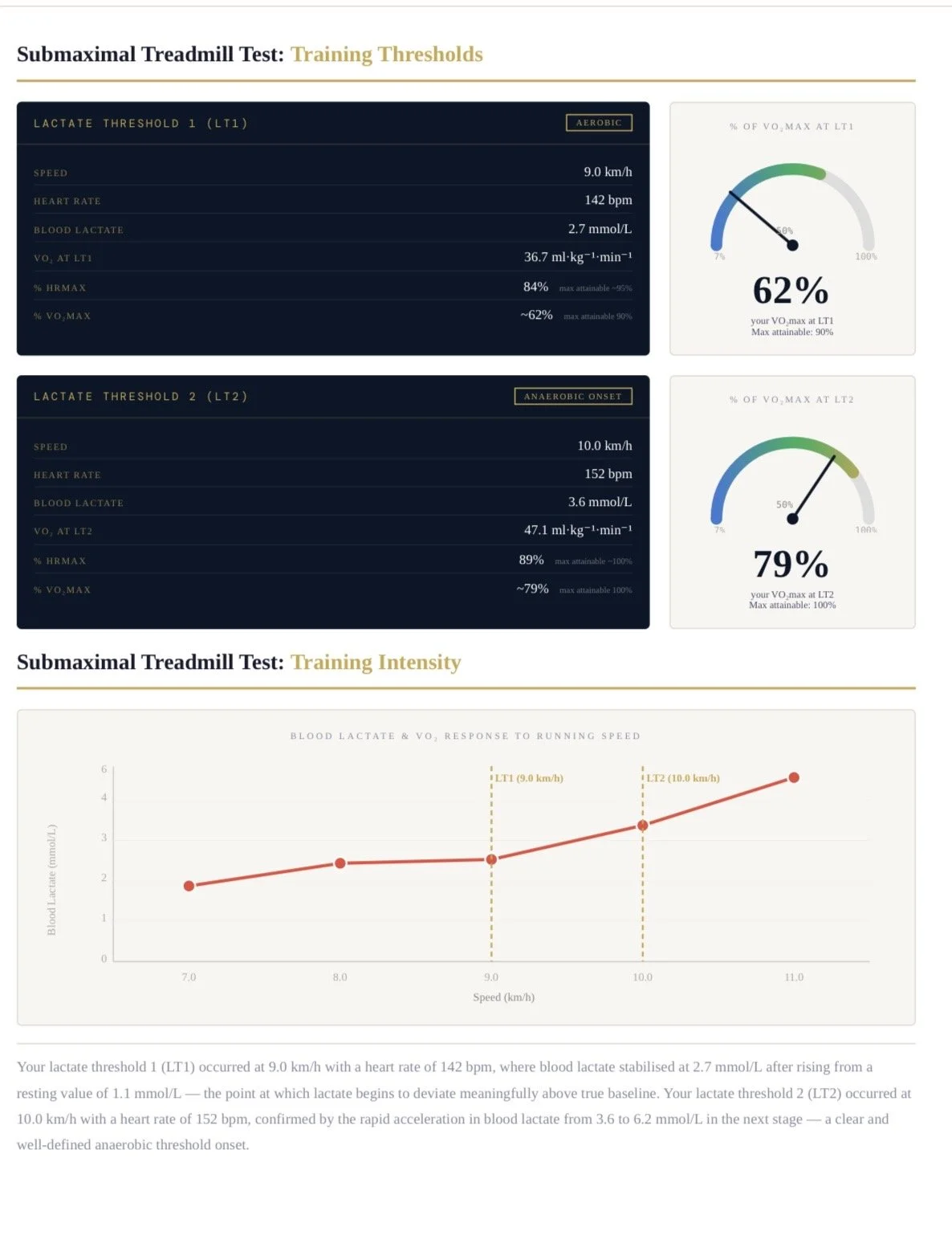
Your first key endurance threshold.
This is the intensity where lactate begins to rise above baseline. It usually represents the upper end of easy aerobic work and helps define the intensity you can sustain for longer-duration training.
Knowing this helps stop your easy sessions becoming too hard.
-
Your second key threshold.
This is the point where lactate begins to accumulate more rapidly and your body is working closer to its sustainable limit.
This is highly useful for tempo work, threshold sessions and race preparation.
-
Your lactate curve shows how your body responds as exercise intensity increases.
This helps highlight whether your endurance base, threshold ability or high-intensity capacity is the main limiter.
-
We identify the heart rate and pace or power associated with your key thresholds.
This gives you practical numbers you can use in real training sessions.
-
Five physiologically-anchored training zones built entirely from your own thresholds — not age-predicted formulas, not resting heart rate estimates. Zones that reflect your actual physiology and make every session count.
-
Accurately measuring your lactate allows you to re test and evaluate if those sessions you have been doing in an attempt to raise your LT2 or your clearance have actually been working.
Why you should get a Blood lactate test.
Most People train hard. Few train precisely.
Without testing, your training zones are a best guess, borrowed from a generic age formula or a number off your watch. You might be grinding through "threshold" sessions that are actually too easy to drive adaptation, or burning matches in zones too hard to sustain. Either way, you're spending real hours and real effort on a plan that was never built for your body.
A Blood lactate test guesswork with your actual physiology. The problem is that two athletes with the same VO₂ max, same 5k time or same heart rate can have completely different lactate profiles. One athlete may be able to hold a strong pace comfortably. Another may be drifting into unsustainable intensity without realising it.
Training without it: easy runs too hard, threshold sessions in the wrong zone, interval work poorly targeted, and plateaus that are hard to explain.
Training with it: clear zones, clear thresholds, clear session targets and a better understanding of what is actually limiting performance.
If you want to train smarter, improve endurance and make every session count, lactate testing gives you the map.
Our other services
-
![]()
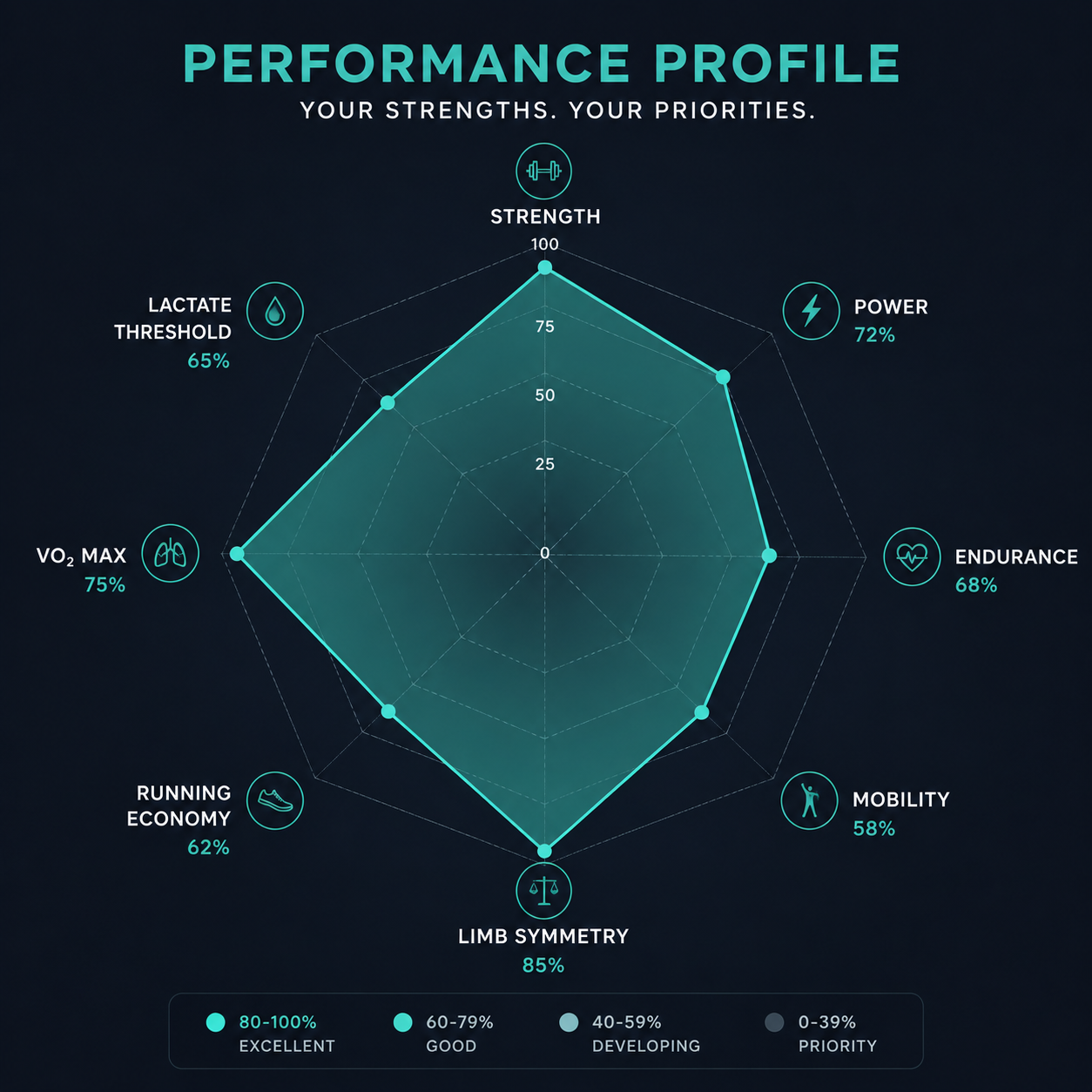
Full Performance profile
The complete package. For people wanting to see the full picture. Combine metabolic and strength data into one complete picture. This allows you to see how all the variables of your performance are effecting each other.
-
![]()
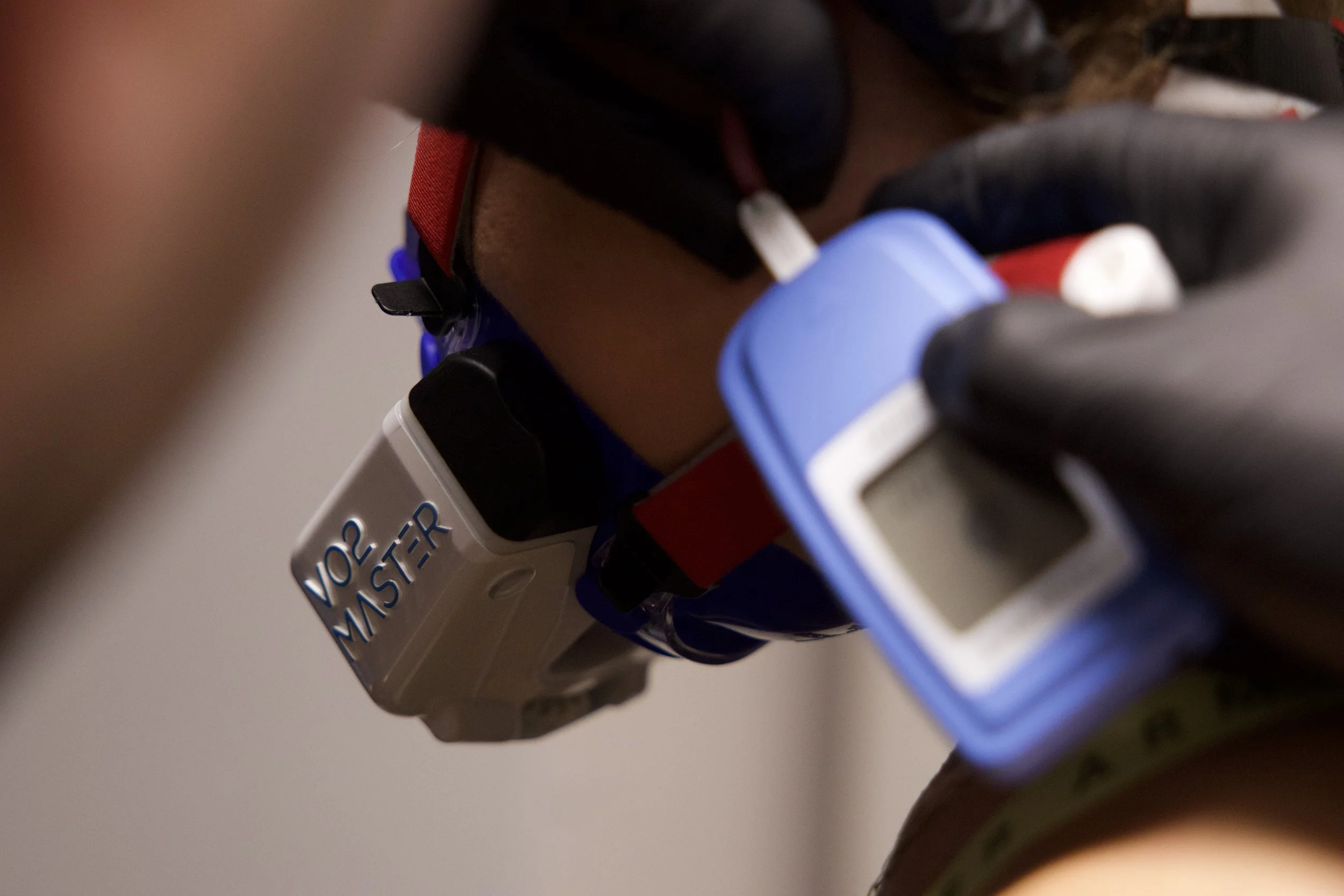
VO2 + Lactate
Our most complete metabolic test. Combining VO₂ max and blood lactate data gives you a gold-standard view of your aerobic capacity, thresholds, training zones and performance limiters
-
![]()
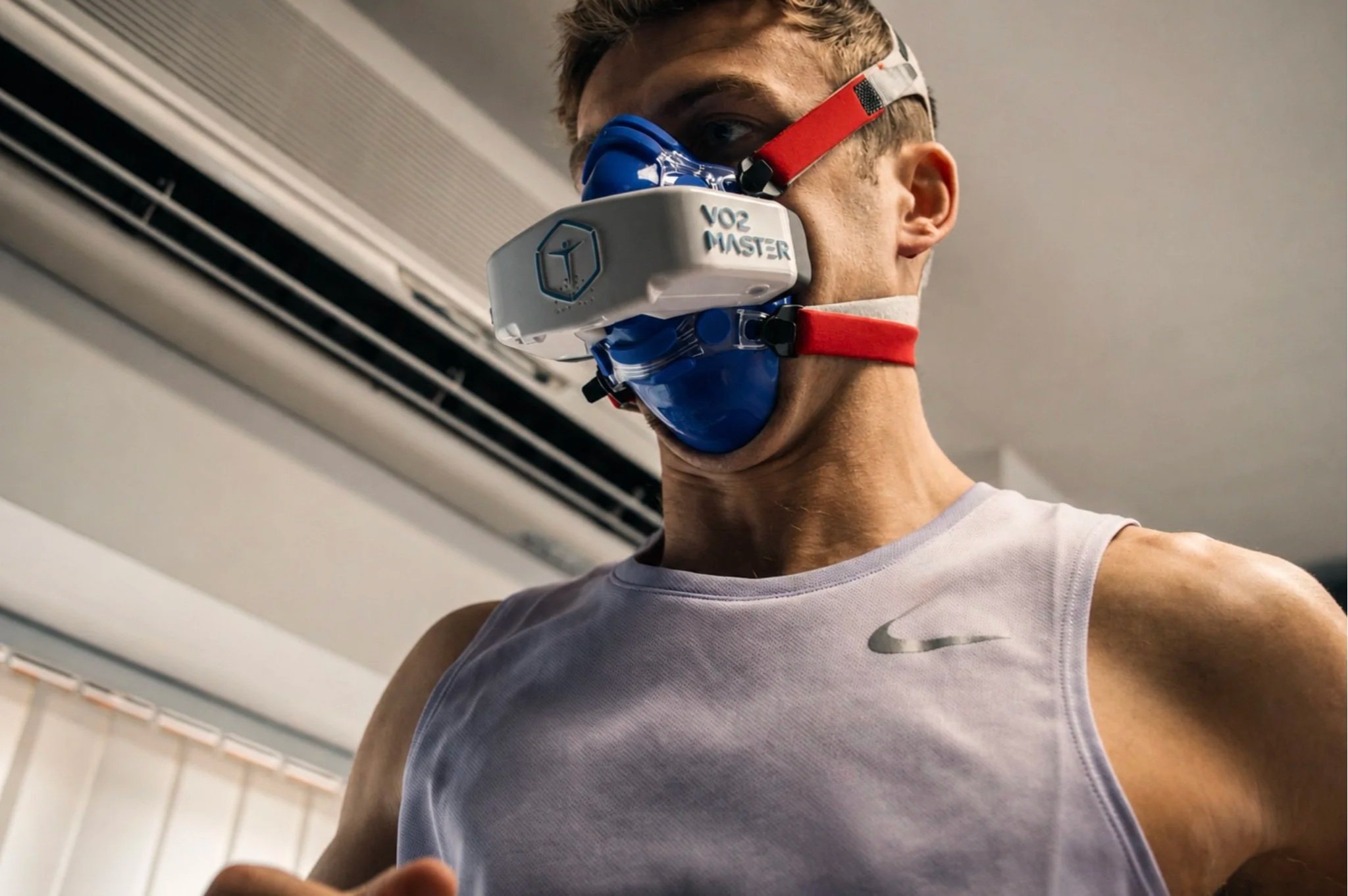
VO2 Max Testing
Measure your aerobic capacity and understand the size of your engine. VO₂ max testing gives you objective data on your fitness, ventilatory thresholds and training zones, helping you train smarter, track progress and improve performance with precision.
-
![]()
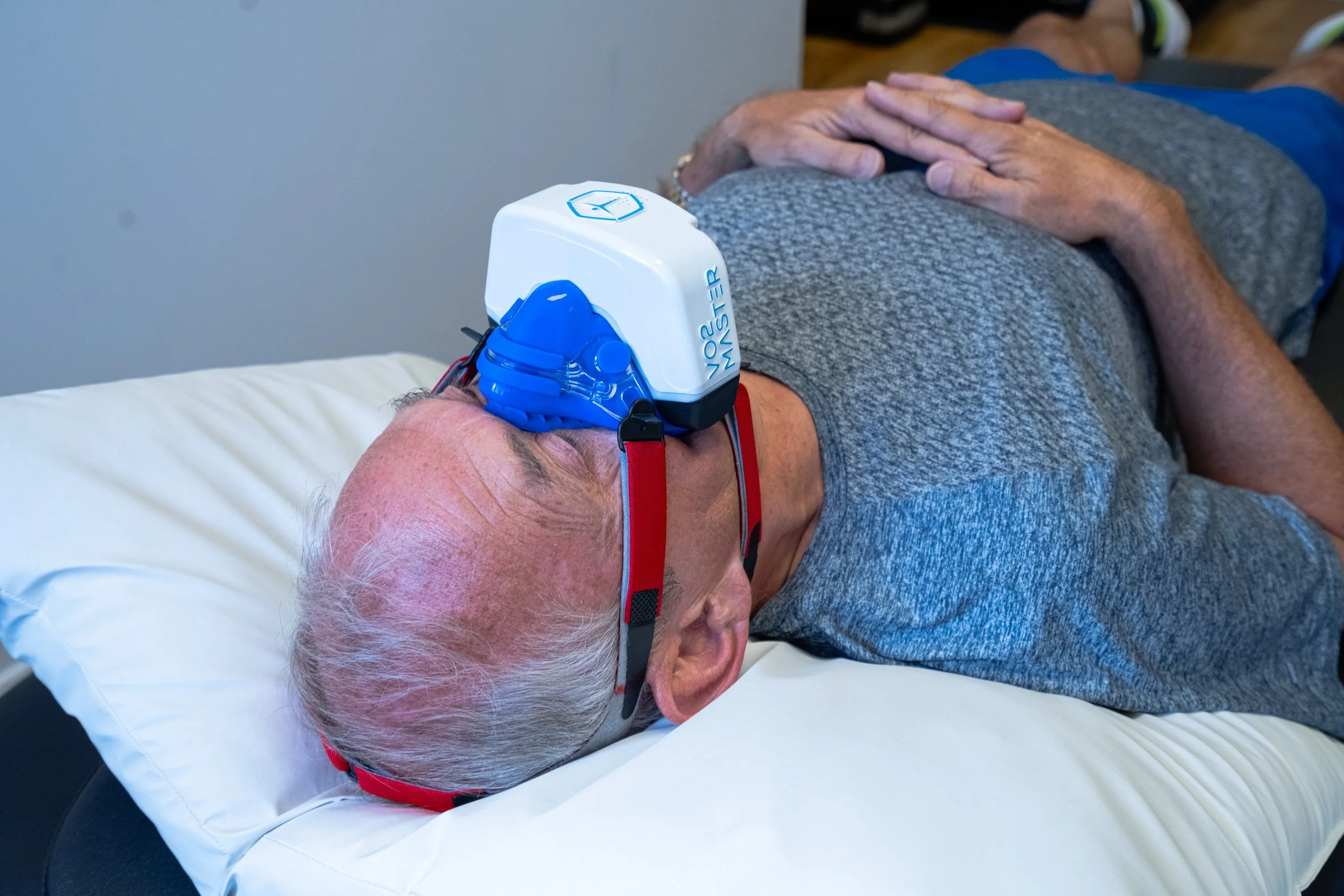
RMR testing
Understand your metabolism and remove the guesswork from nutrition. RMR testing measures how many calories your body burns at rest, giving you a clear foundation for fat loss, fuelling, performance and long-term progress.
Contact us
Frequently Asked Questions
-
The active test usually takes around 30–45 minutes. The full appointment, including preparation, testing and results explanation, usually takes around 75 minutes.
-
Not at all. We test everyone from club runners to competitive professionals. The data is equally valuable at every level and athletes earlier in their development often see the biggest gains from applying threshold-based training for the first time.
-
Arrive rested and avoid strenuous exercise for 24-48 hours beforehand. Avoid a heavy meal in the 2-3 hours prior, and arrive well hydrated. We’ll send you a full pre-test protocol when you book.
-
We can test on either. Most runners choose the treadmill; cyclists typically prefer the bike. If you’re unsure, we’ll advise you at the point of booking.
-
A big one. In a controlled trial, people who trained to individually tested thresholds gained more than double the fitness of those using generic formula-based zones — and every single one of them improved, versus fewer than half on the standard method. Accurate zones mean every session targets the right intensity, so less effort is wasted.
-
Only small capillary blood samples are taken, usually from the ear or finger.
Most people tolerate it very well and in fact do not feel anything at all once running.
-
If you want to understand your overall aerobic ceiling, VO₂ max is useful.
If you want accurate training zones and threshold data, lactate testing is usually more directly useful for programming.
The combined VO₂ max and lactate test gives the most complete picture.
-
How often you get a lactate test depends entirely on the level of insight you are looking for. As your physiology changes re testing allows you to track what is working and adjust your training to suit your new markers. Some people do a one off test but most re test every 3,6 or 12 months.