Resting metabolic rate testing - Cheshire
Know exactly how many calories your body burns. Train, fuel and lose weight with precision.
What is Resting metabolic rate testing?
Resting Metabolic Rate testing is the most accurate way to understand how many calories your body burns at rest. At Perform180, we help runners, gym-goers, athletes, and anyone focused on body composition uncover their energy demands.
By measuring your oxygen consumption at rest, we can identify your personalised daily calorie baseline, giving you a clearer starting point for nutrition, fat loss, performance fuelling, or long-term health goals.
Whether you’re trying to lose body fat, fuel training properly, avoid under-eating, or finally understand why generic calorie targets haven’t worked, RMR testing gives you the clarity and confidence to make smarter decisions with your nutrition and training.
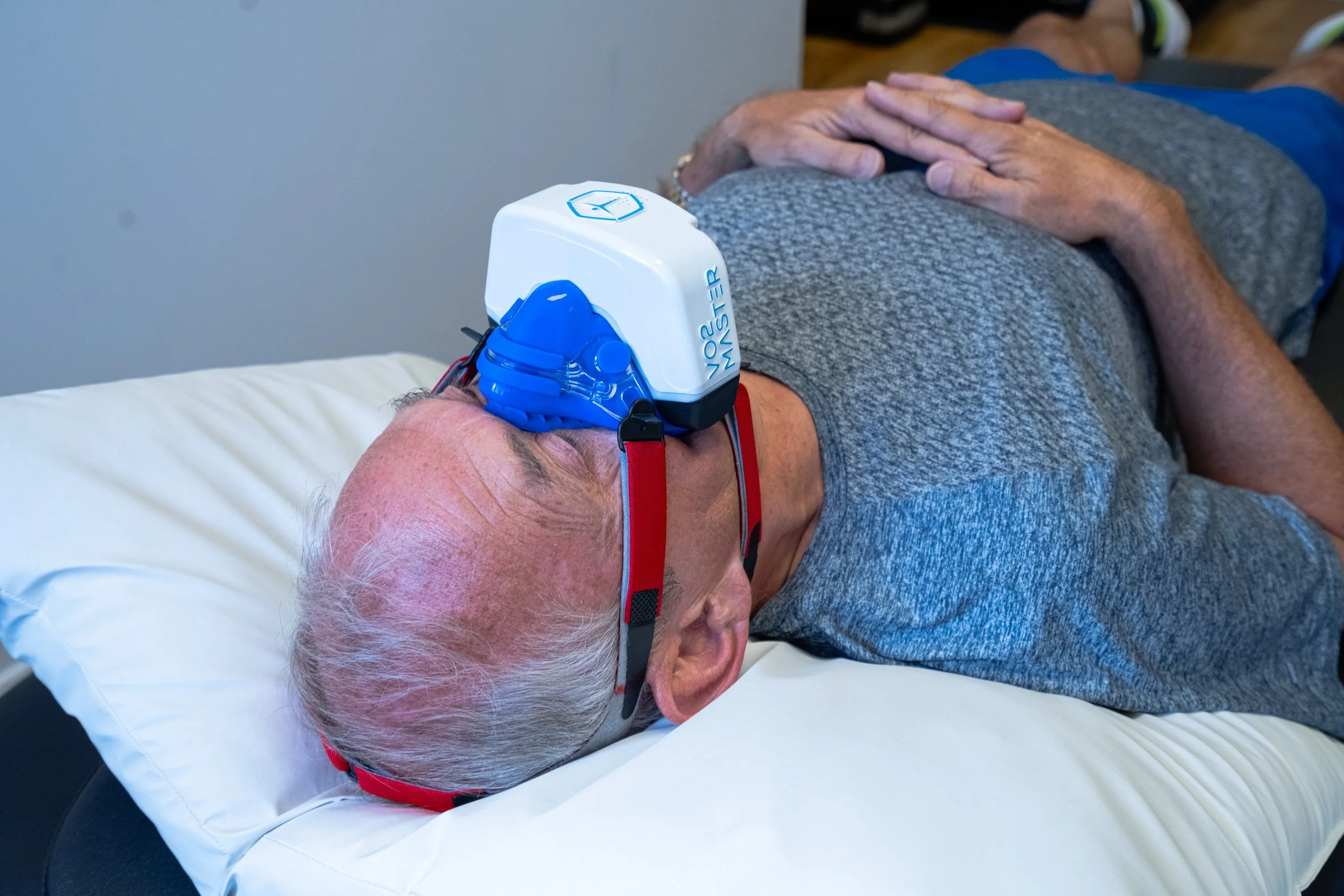
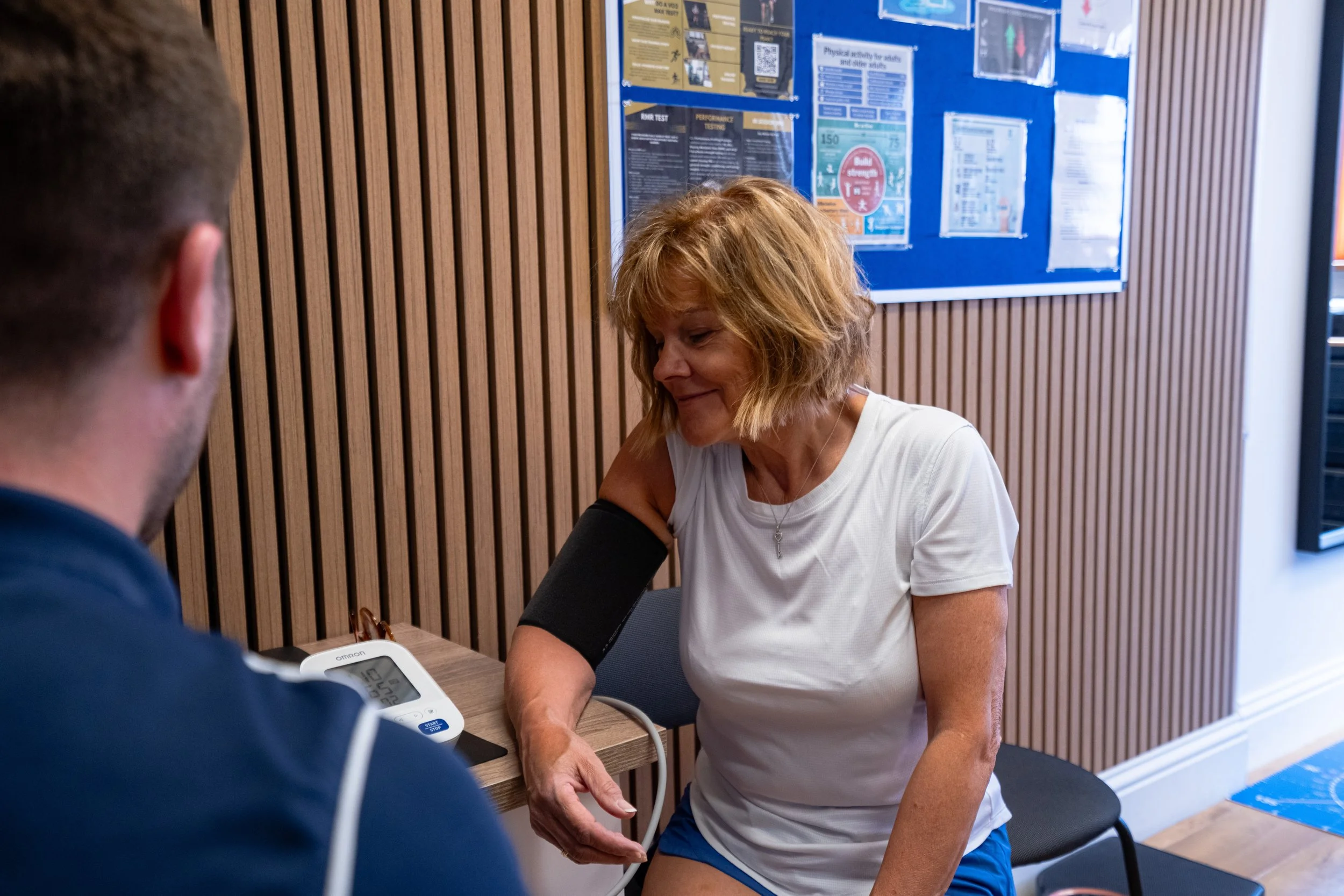
How our RMR test works
Your resting metabolic rate is measured using indirect calorimetry, by measuring your expired oxygen at rest. This works due to energy production being directly tied to oxygen use, this measurements lets us calculate how many calories you burn at complete rest.
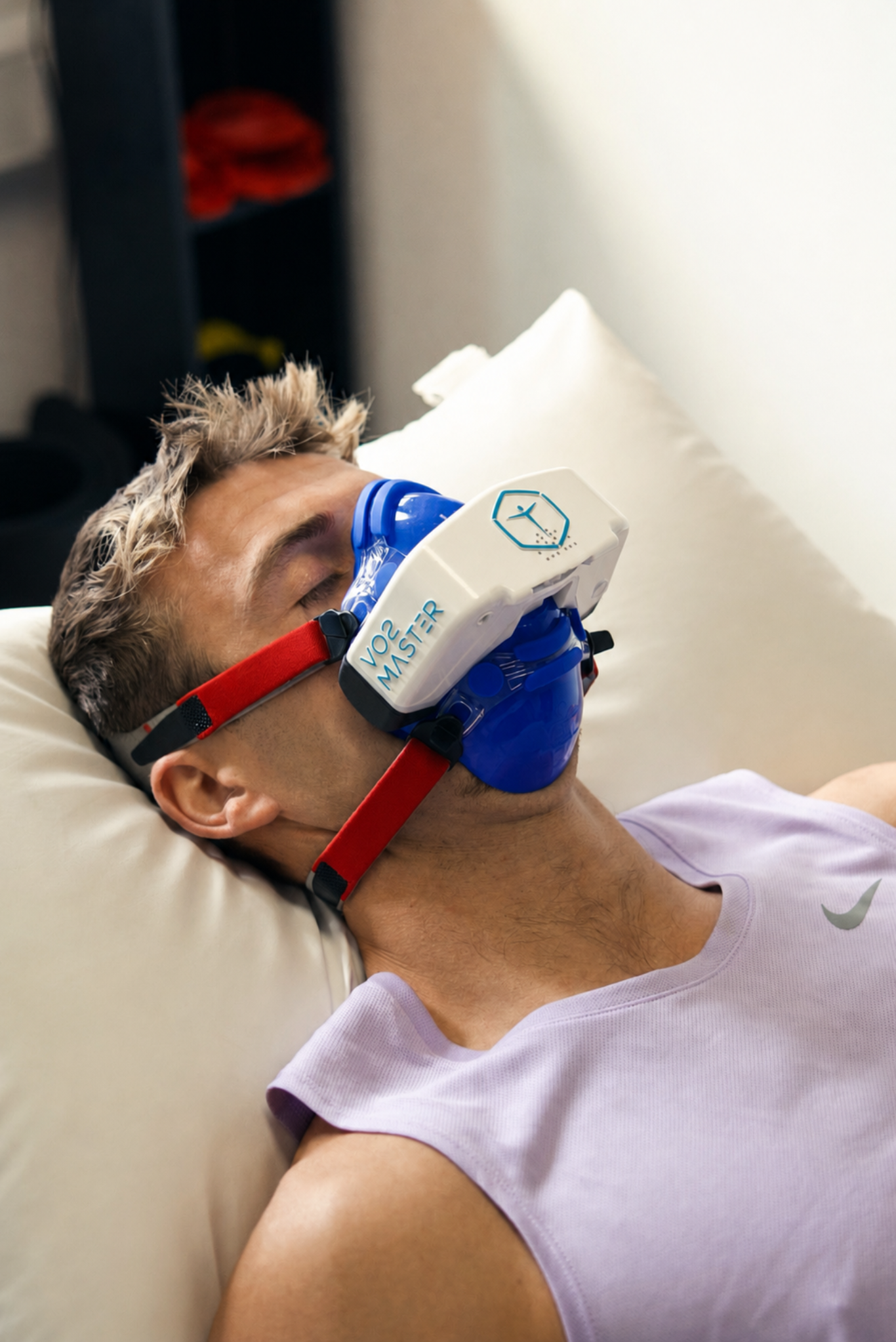
The test is simple and completely non-invasive. You rest in a comfortable position for around 20 minutes while we record your data, with no exercise and no needles. To make sure the reading reflects your true resting metabolism, you’ll attend fasted and well rested. The full session takes approximately 45 minutes, including a pre-test consultation and a detailed debrief where we explain your results and what they mean for your goals.
No guesswork.
What data do you get from your RMR test?
-
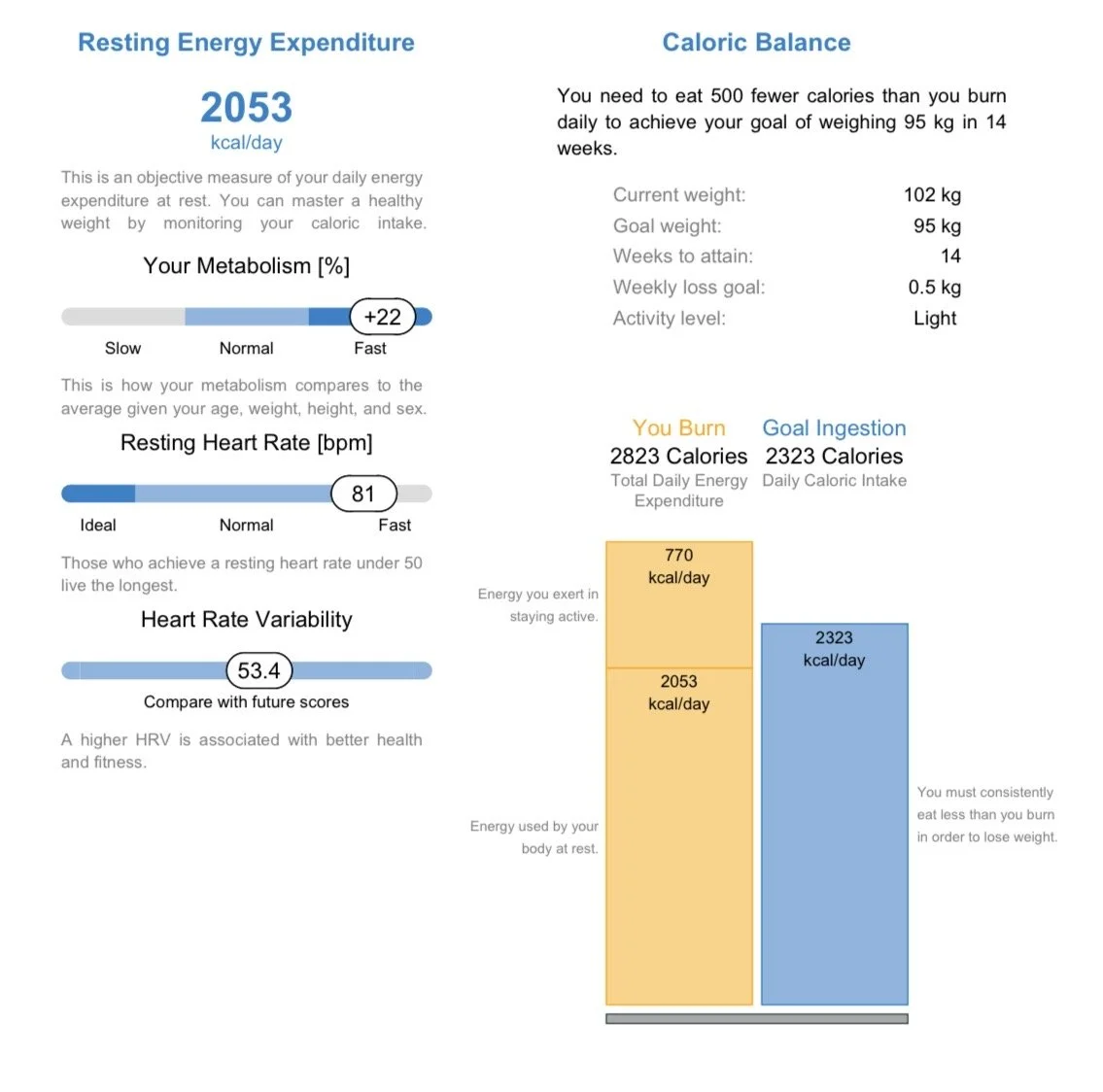
The calories your body burns at complete rest just to keep you alive, measured directly rather than estimated from a generic formula. For most people this is 60 to 75% of total daily energy use, making it the single most important figure for setting accurate nutrition and weight-management targets.
-
Your measured RMR combined with an activity factor to estimate the total calories you burn across a typical day. This is your real-world starting point for a fat-loss deficit, a performance surplus, or maintenance.
-
Your respiratory exchange ratio reveals the balance of fat versus carbohydrate you burn at rest. It shows how efficiently your body uses fat as a fuel and can flag whether your metabolism is leaning more heavily on carbohydrate than expected.
-
Clear, individualised intake recommendations built from your actual numbers, whether your goal is losing body fat, fuelling training, or maintaining a healthy weight, not a one-size-fits-all calculator estimate.
-
Your measured RMR benchmarked against the value standard equations would predict for your age, sex, height and weight, so you can see whether your metabolism is running faster, slower, or in line with expectations.
Why should you get an RMR test?
Most people make decisions based on assumptions or online calculators. Real results come with accuracy.
Most people make decisions about calories based on assumptions, apps, watches or online calculators with no stable base to calculate from
But real progress starts with better information.
Without testing, your calorie target is usually based on an equation or rough estimate. Sometimes that may be close — but often, it can be hundreds of calories away from what your body actually needs.
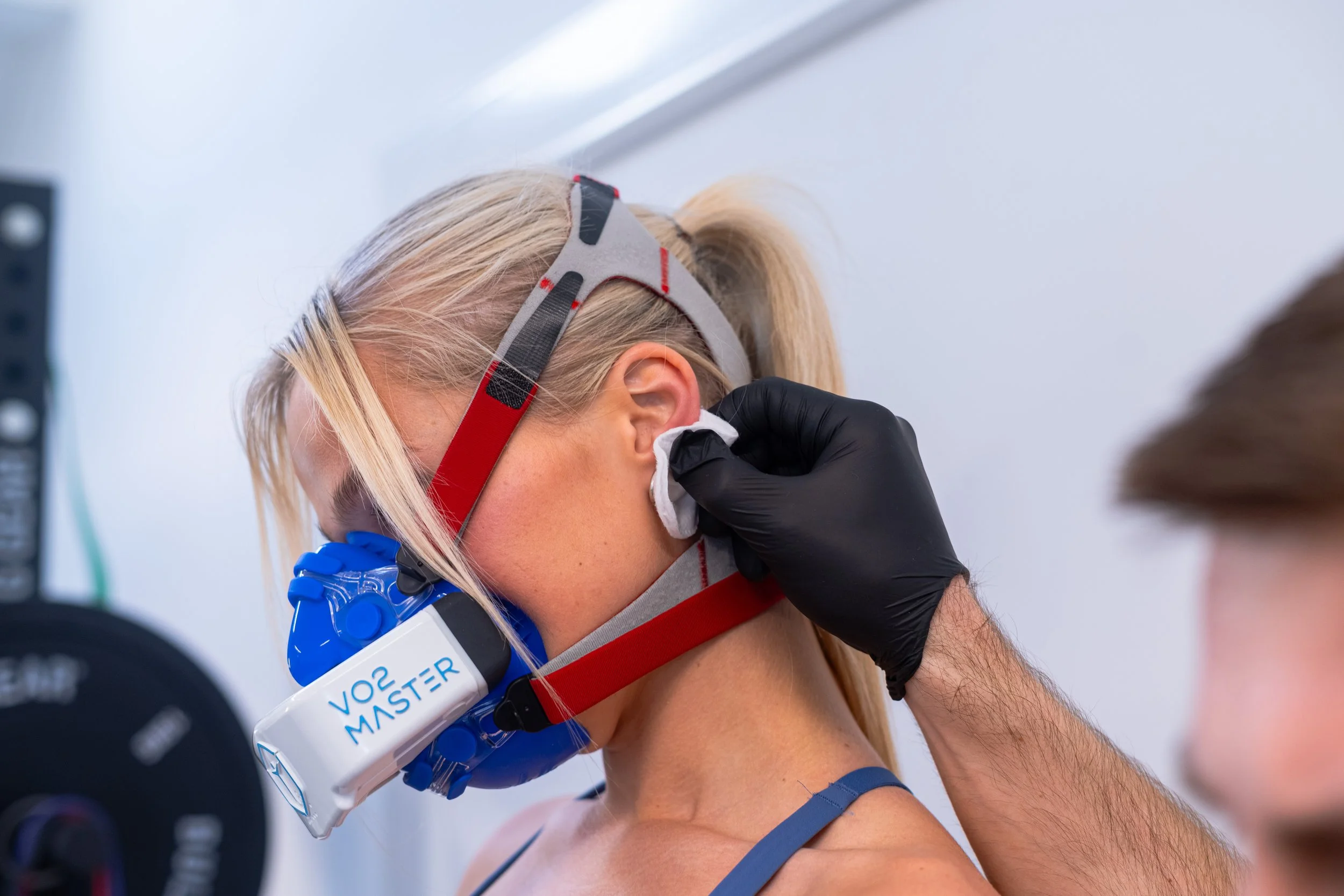
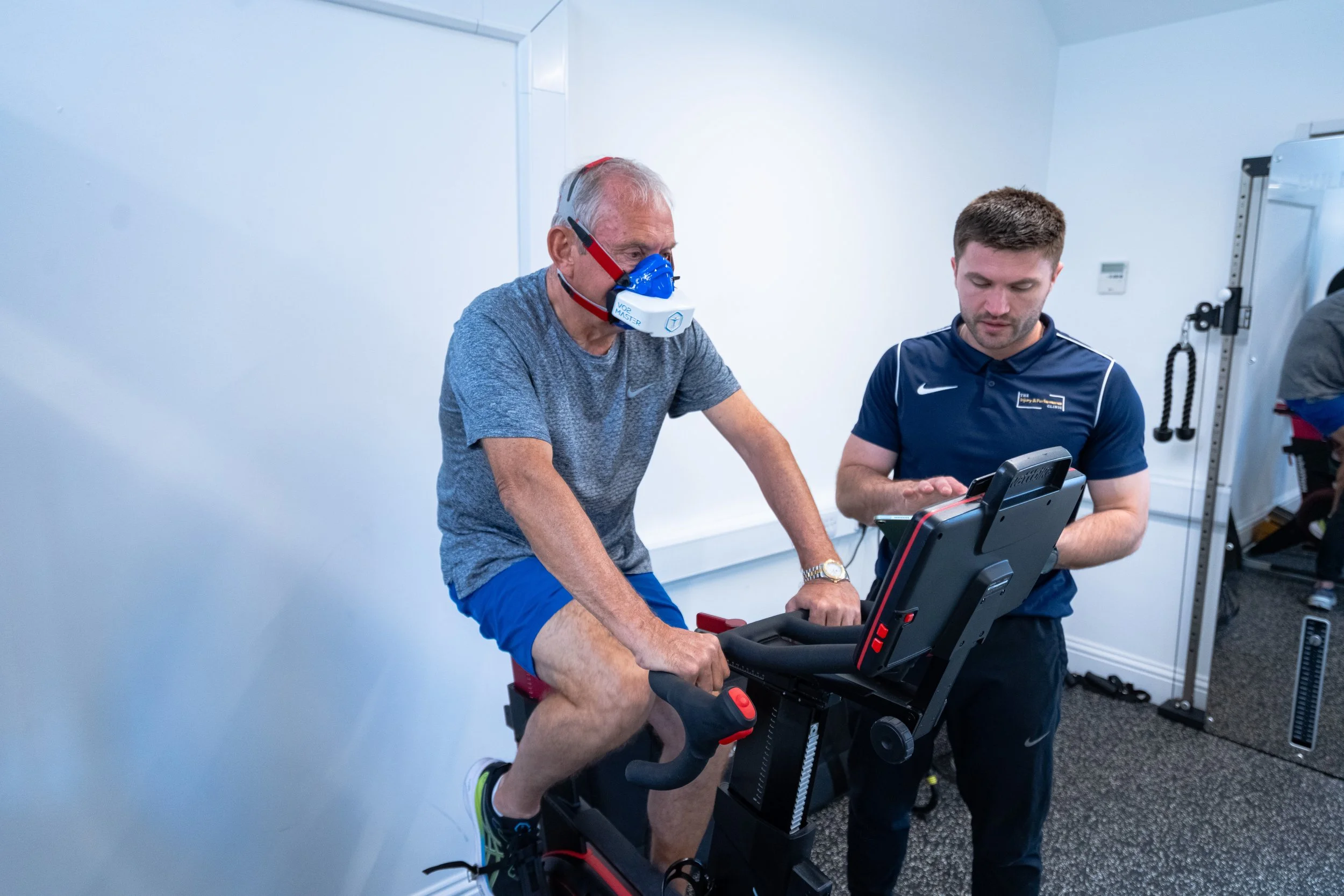
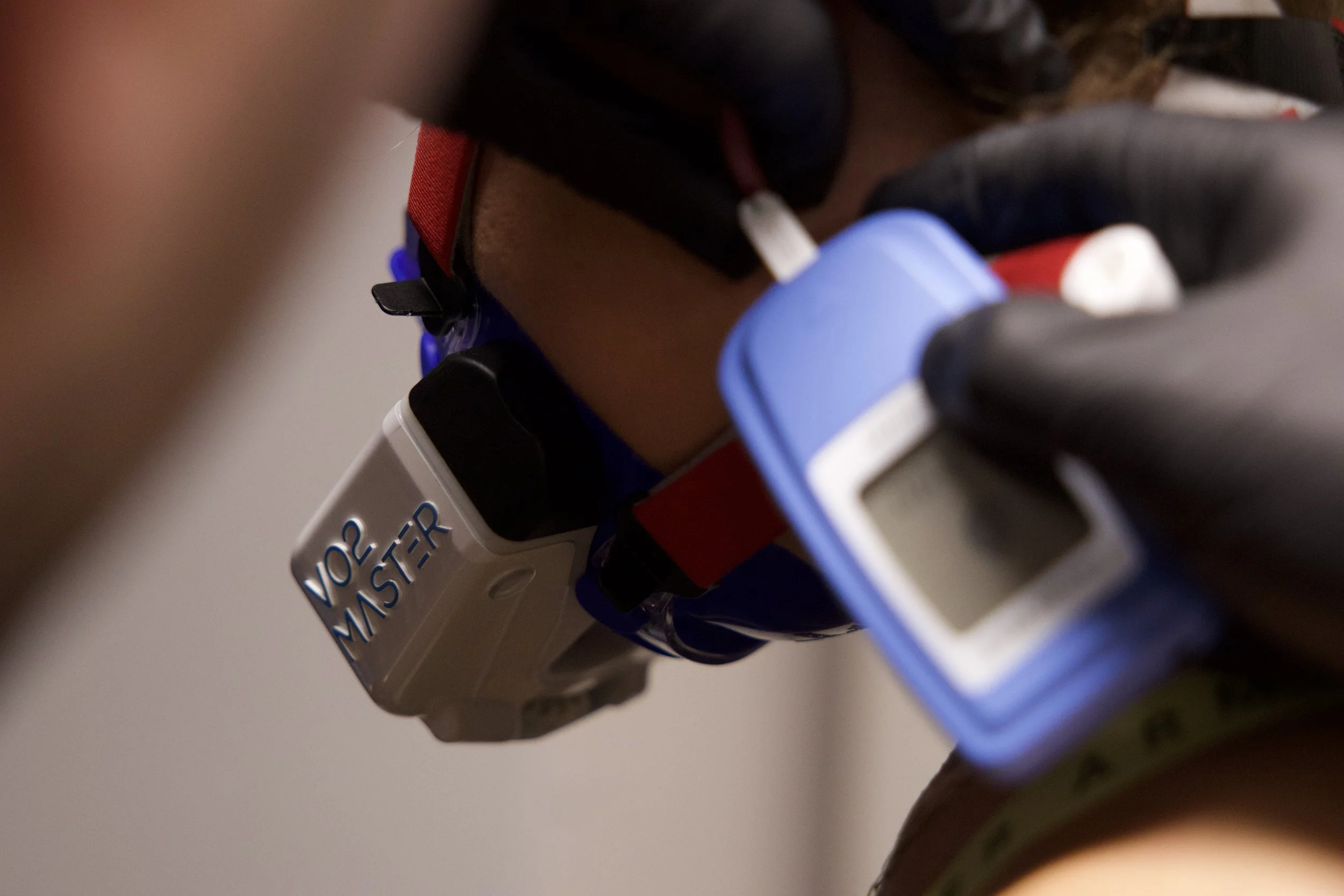
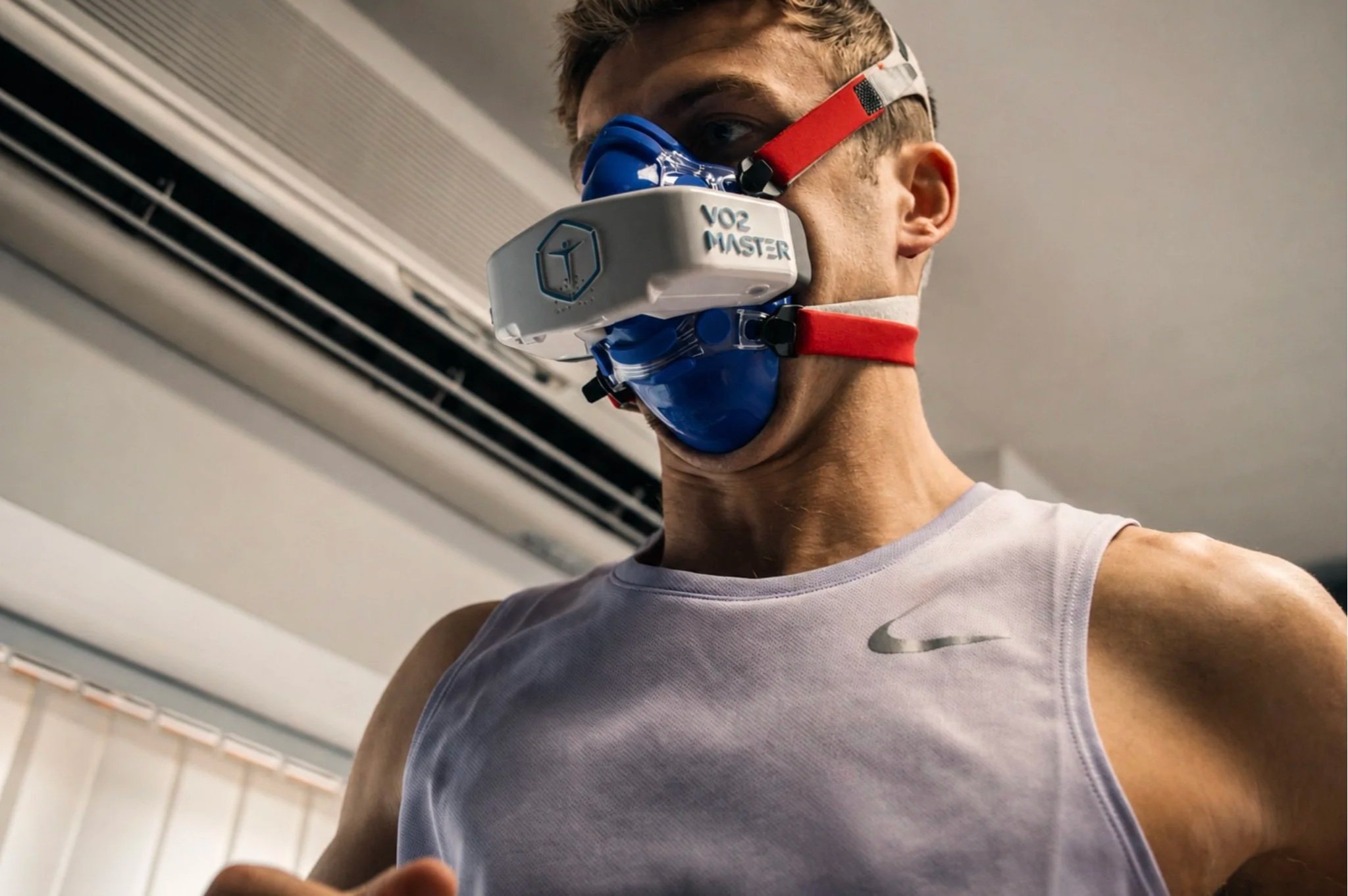
Our RMR assessment uses the VO₂ Master Pro to measure resting oxygen uptake under controlled, repeatable conditions. This gives a more individualised estimate of your resting metabolic rate.
Our other services
-
![]()
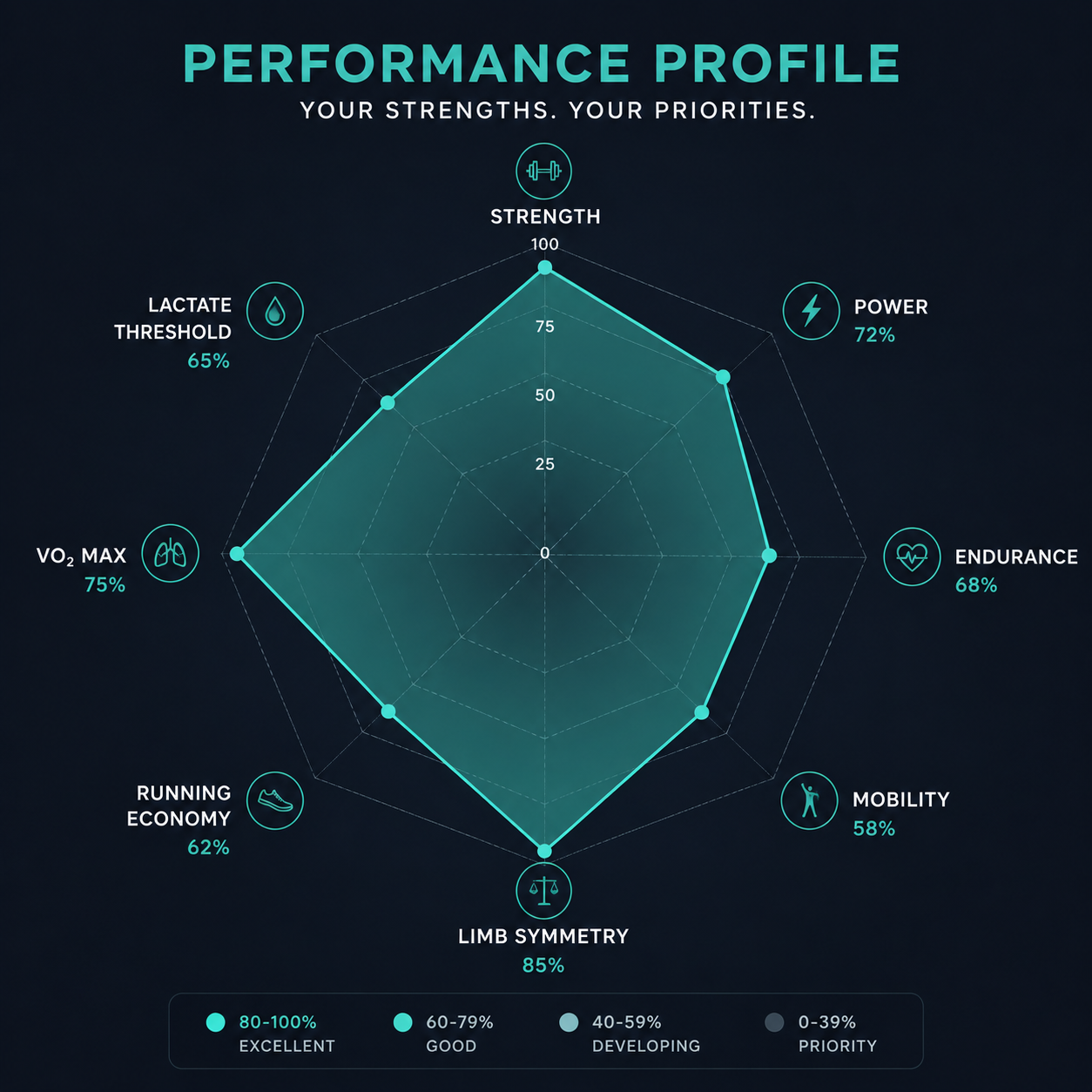
Full Performance profile
The complete package. For people wanting to see the full picture. Combine metabolic and strength data into one complete picture. This allows you to see how all the variables of your performance are effecting each other.
-
![]()
VO2 + Lactate
Our most complete metabolic test. Combining VO₂ max and blood lactate data gives you a gold-standard view of your aerobic capacity, thresholds, training zones and performance limiters
-
![]()
VO2 Max Testing
Measure your aerobic capacity and understand the size of your engine. VO₂ max testing gives you objective data on your fitness, ventilatory thresholds and training zones, helping you train smarter, track progress and improve performance with precision.
-
![]()
Lactate testing
Blood lactate testing gives you a clear view of how your body responds as intensity increases. By identifying your key thresholds and training zones, we can show you exactly where to build endurance, improve efficiency, and train harder without guessing.
Contact us
Frequently Asked Questions
-
The active test usually takes around 20 minutes. The full appointment, including preparation, testing and results explanation, usually takes around 45–60 minutes.
-
Absolutely!. It gives you a measured starting point for calorie planning.
Instead of relying on generic calorie calculators, we can build your nutrition approach around your actual resting metabolism.
-
For the most accurate result, we usually recommend avoiding intense exercise for 24 hours beforehand, avoiding caffeine and nicotine before the test, and arriving fasted for several hours where appropriate.
We’ll give you clear preparation instructions before your appointment.
-
Not at all, RMR testing is done at rest. You do not exercise during the test.
It is suitable for general health clients, athletes and anyone wanting to better understand their metabolism.
-
No. RMR testing is useful for fat loss, muscle gain, performance, recovery and general health.
It helps you understand your baseline energy needs, so whether you want to lose weight, maintain weight, fuel training better or build muscle, your plan starts from real data rather than guesswork
-
The test gives you the physiological data. We then help you understand what that means in practical terms for your goal.
It does not replace a full nutrition plan, but it gives you a far better foundation in knowing what that plan should look like.
-
Online calculators and watches can be useful estimates, but they are still predictions.
Research has shown that even the best RMR prediction equations may only get around 80% of people within ±10% of their measured metabolism, with other equations performing much worse. Wearables are also limited, with a 2022 systematic review finding energy expenditure error above 30% across all brands studied.
RMR testing is different because it directly measures your breathing data at rest.
-
How often you get a RMR test depends entirely on the level of insight you are looking for. As your metabolism changes re testing allows you to track what is working and adjust your strategies to suit your new markers. Some people do a one off test but most re test every 3,6 or 12 months.